San Cristóbal de La Laguna
San Cristóbal de La Laguna
A former capital of the Canaries and UNESCO World Heritage site, La Laguna unfolds its colonial grid-patterned centre in the north of Tenerife. Heritage, gastronomy and student atmosphere.
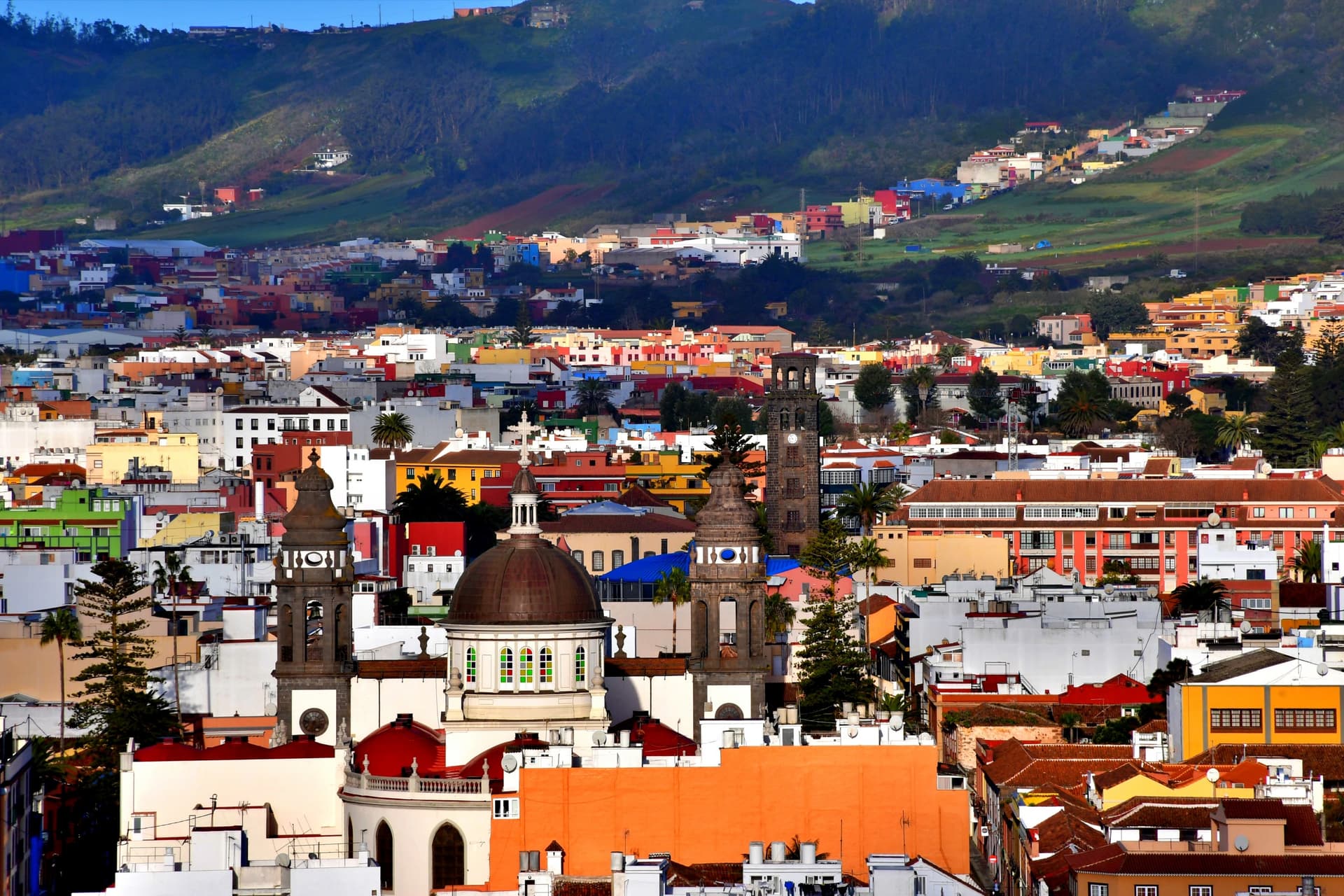
From top to bottom, San Cristóbal de la Laguna will immerse you in 15th-century colonial atmosphere with its narrow streets, expansive plazas, temples, convents and richly coloured courtyards. The beauty of this charming old city earned it UNESCO World Heritage status. A visit is essential!
A Brief History of La Laguna
The Valley of Aguere (the current plaza of San Cristóbal de La Laguna) and the great lake were once considered sacred places by the island's natives, particularly the Guanches. Towards the end of the 15th century, conquistador Alonso Fernández de Lugo founded the city of San Cristóbal de La Laguna on a plateau, 550 metres above sea level, in the north of Tenerife. Once the capital of Tenerife and the Canaries, it is also the largest city on the island. It is divided into two sections: the Villa de Arriba (upper town) and the Villa de Abajo (lower town). Thanks to its historic centre, which faithfully reflects the colonial era, La Laguna has been recognised as a UNESCO World Heritage site since 1999.
Exploring San Cristóbal de La Laguna and Its Historic Centre
The Historic Centre of La Laguna
The historic centre is quite compact, making it ideal to explore on foot in this enchanting setting. Those arriving by car can park near Plaza del Adelantado, in the heart of the city centre. As you wander through this centuries-old city, you'll have the distinct impression of stepping back 500 years in time. The perfectly straight lines of its streets and the grid-like layout of its historic centre served as a blueprint for the development of major Latin American cities. Visitors are left speechless by La Laguna's nearly intact colonial architecture. Here you can still glimpse rare colonial-style buildings with wooden balconies and intricately carved façades. It's hardly surprising the site was declared a "Cultural Property of Humanity" in 1999.
Religious Buildings, Convents and Hermitages
Numerous churches and convents are scattered throughout La Laguna, earning it the nickname "Florence of the Canaries". To name but a few:
- Church of Nuestra Señora de la Concepción (16th century);
- Cathedral Church of Nuestra Señora de los Dolores;
- Church of Santo Domingo de Guzmán;
- Church and Convent of Saint Augustine;
- Church of San Bartolomé de Tejina;
- Hermitage of Cruz del Carmen;
- Hermitage of San Cristobal;
- Church of San Juan Bautista;
- Hermitage of San Miguel;
- Former Convent of Santo Domingo;
- And more.
The Church of Nuestra Señora de la Concepción
Built in the early 16th century in San Cristóbal, the Church of Nuestra Señora de la Concepción (Church of Our Lady of the Conception) is Tenerife's oldest cathedral. From the outside, the brick bell tower, standing approximately 28 metres high, immediately catches the eye. Over the centuries, this religious building underwent successive modifications, explaining the blend of Gothic, Plateresque and Mudéjar styles. Inside, pay attention to the wooden pulpit, the high altar, the ceramic baptismal fonts and the Chapel of the Immaculate Conception. Don't stop there—the impressive basalt bell tower is equally worthy of admiration. While you're at it, don't miss the panoramic views from the top of the Concepción church. It's no surprise that the Church of la Concepción was declared a "National Historic and Artistic Monument" in 1948.
The Museum of History and Anthropology of Tenerife (MHA)
The Museum of History and Anthropology of Tenerife is essential for those wanting to delve deeper into the history of Tenerife and La Laguna. The museum spans three floors in the Casa Lercaro, in the heart of the Laguna municipality. The collections include various tools, maps, information panels and more. Through the exhibitions, visitors can trace the island's history and gain a clearer understanding of events that unfolded from the 15th to the 20th centuries.
Plaza del Adelantado (Adelantado Square)
Highly frequented, Plaza del Adelantado is the meeting point for travellers passing through La Laguna. It takes its name from Alonso Fernández de Lugo, the island's conqueror. All major events in the city once took place here. A magnificent marble fountain, weighing approximately 30 tonnes, stands in the centre of this expansive square, surrounded by a few trees. Other emblematic buildings are visible around Adelantado, including: City Hall, Palacio de Nava, the Hermitage of Saint Michael and others.
Other Points of Interest
- Museums (Museum of Sciences and the Cosmos, Sabandeños Museum, Museum of Sacred Art, etc.)
- Anaga Rural Park
To avoid missing the most interesting aspects, be sure to stop at the La Laguna Tourist Office, located in the Casa de los Capitanes Generales or Casa Alvarado Bracamonte. A city map will be provided upon arrival.
Tenerife's airports ensure La Laguna's connections with the rest of the Canaries, mainland Spain and abroad.
- Tenerife North Airport (Los Rodeos Airport) is just 3 kilometres from La Laguna's city centre. It typically handles domestic and inter-island flights.
- Tenerife South Airport (Reina Sofía) manages international connections. It is located approximately 60 kilometres from Laguna's city centre.
To explore the island, you can choose between car rental or public transport. If you opt for the former, you can use:
- Motorway TF-5 (North and Northeast of the island);
- Motorway TF-1 (East and South of the island);
- Connection Road TF-2, linking TF-5 and TF-1.
Called Guaguas in the Canaries, the bus is a convenient way to get around Tenerife. Below are the transport lines that pass near San Cristóbal de La Laguna:
- Buses: 108, 206, 26, 275;
- Tram: 1.
When to Visit?
In San Cristóbal de La Laguna, summers are comfortable and dry while winters are long and cool. Temperatures range between 12°C and 26°C throughout the year. January, November and December are the wettest months. During the summer season, from early June through late September, travellers can enjoy San Cristóbal de La Laguna's exceptional setting solo, with family or in groups.
Want to discover this destination?
Our local advisors design your tailor-made trip.