Practical information Canary Islands
Preparing a trip to the Canaries raises fewer administrative questions than a distant destination, but a few particularities deserve the attention of our team based in Tenerife. The archipelago is Spanish and therefore part of the European Union, which simplifies entry for French, Belgian and Swiss nationals, but remains outside the European VAT zone, with a local tax regime called IGIC at 7 percent. On the health side, no specific vaccine is required, the European health insurance card is sufficient for Europeans. The average budget is around 90 to 130 euros per day and per person excluding international flights, with variations depending on the season and type of accommodation. The climate works in layers: 22°C in winter on the south coast of Tenerife or Gran Canaria, but 5°C in the mountains, and sometimes snow on Teide between January and March. Inter-island transport combines fast ferry, notably between Tenerife, La Gomera and La Palma, and domestic flights of 30 to 45 minutes with Binter and CanaryFly. A car is essential on each island, public transport remaining limited outside major cities. Sébastien and the team are happy to answer your questions about local specificities, Canarian etiquette (late aperitif, lunch around 2pm), the regulated trails of Teide National Park which require authorization to reach the peak, or the best island combinations depending on your dates.
Plan your trip by theme
Explore our practical guides organized by category to quickly find the information you need.
Before You Go
ID card or passport, no visa required for Europeans, travel insurance, formalities to arrange before your trip to the Canaries.
3 articles
Budget
Euro currency, €90 to €130 per day, widespread card payments, Spanish-style moderate tipping.
1 article
Climate Season
Mild climate year-round, 18 to 28°C depending on the season, northerly trade winds, significant temperature differences between coast and mountains.
1 article
Transports
Short inter-island flights with Binter, fast ferries Fred Olsen and Naviera Armas, car rental essential on site.
2 articles
Culture
Guanche heritage, Latin American influence, late dinners, siesta still practiced, Spanish language with Canarian accent.
5 articles
Useful Tips
Very safe destination, drinking water from the tap, European electrical outlets, good mobile coverage, advice from our team in Tenerife.
2 articlesAll practical guides
Search and filter among 14 articles







14 of 14 results
Frequently asked questions
The answers to the most frequently asked questions from our travellers.
Since the Canaries are part of Spain, no visa is required for French, Belgian, Swiss and Luxembourg nationals. A valid national ID card or passport is sufficient to enter and stay for up to 90 days. We recommend a passport rather than an ID card, which is simpler in case of car rental or police checks. For Canadian nationals, entry is visa-free for a tourist stay of less than 90 days, with a passport valid for at least 3 months after the planned return date. From mid-2025, ETIAS authorization will be required for Canadian and non-European travelers, approximately 7 euros, valid for 3 years.
No vaccines are mandatory to enter the Canaries. We simply recommend staying up to date with universal vaccinations: diphtheria, tetanus, poliomyelitis, pertussis, and MMR for people born after 1980. There is no risk of malaria, dengue or yellow fever in the archipelago. Tap water is drinkable everywhere, although many Canarians prefer bottled water for taste. For Europeans, the European Health Insurance Card (EHIC) covers routine care in the Spanish public health system. We still recommend comprehensive travel insurance that covers repatriation and sports activities if you plan mountain hiking, diving or water sports.
Excluding international flights, budget 90 to 130 euros per day per person for a couple for a comfortable stay, with mid-range accommodation, car rental and restaurants. For a more budget-friendly version, around 60 to 80 euros per day with an apartment, supermarket shopping and local restaurants. As examples, a night in a 4-star hotel runs around 100 to 160 euros for a double room, a daily menu in a local guachinche around 12 to 18 euros per person, a full tank of petrol for a compact car 50 euros, entry to the Teide cable car 40 euros. High season around Christmas and Easter increases accommodation costs by 30 to 50 percent.
The archipelago can be visited year-round with temperatures ranging between 18 and 28°C on the coasts. April, May, June and September, October offer in our view the best balance: sea at 21-23°C, little rain, moderate visitor numbers. July and August remain pleasant but popular sites fill up and prices rise. Winter from December to March stays mild, ideal for escaping European cold, with sometimes snow on Teide above 2,500 meters. The calima, a Saharan wind, can blow for a few days per year between February and March, reducing visibility. The north of the islands, especially Tenerife and La Palma, remains more humid and cloudy than the south year-round.
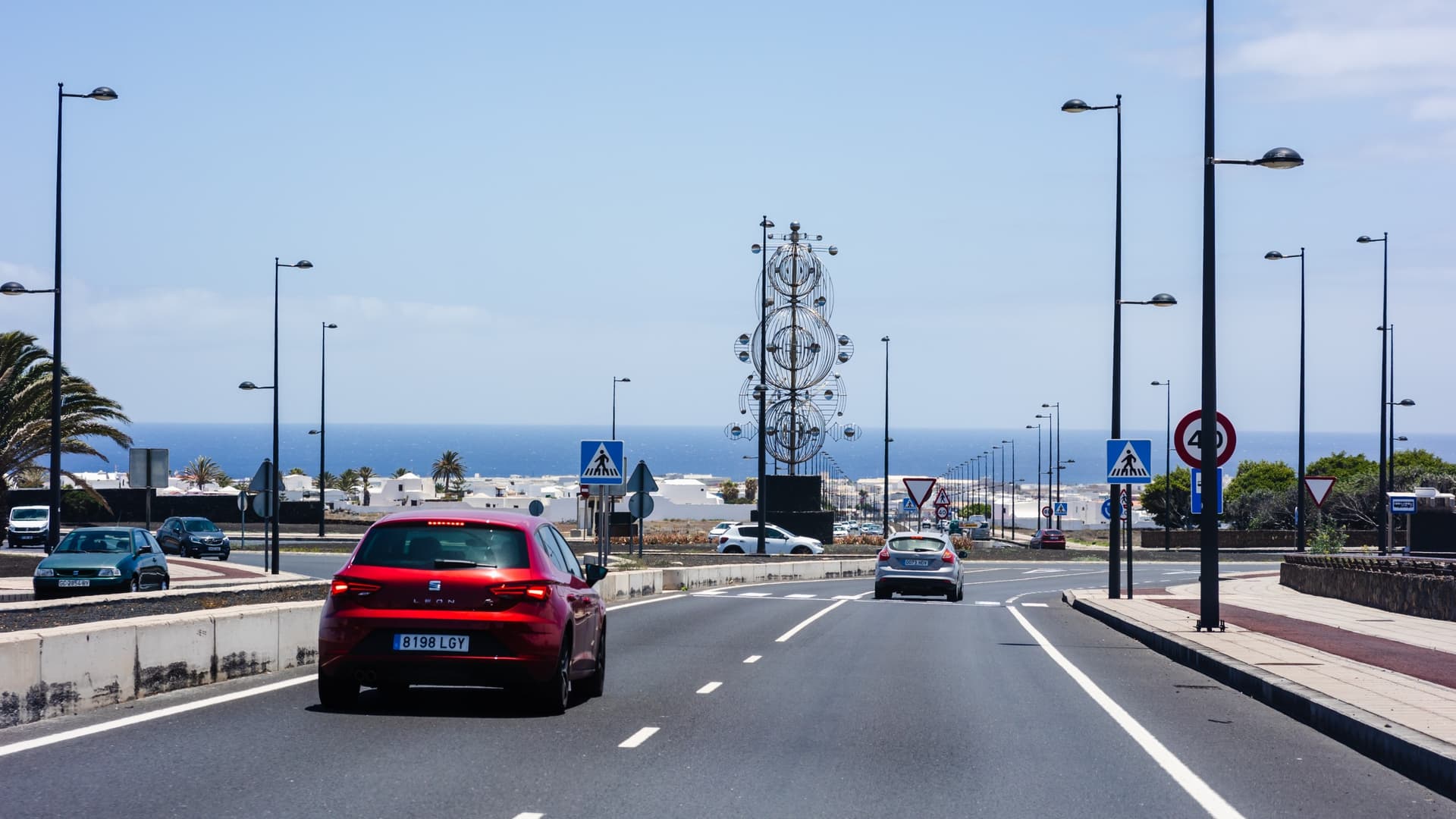
On each island, a rental car is essential to explore freely, as public transport is limited to major coastal routes. Count on 30 to 50 euros per day for a mid-range category, and a French driving license is sufficient. Between islands, you have two options. The fast ferry Fred Olsen or Naviera Armas connects Tenerife to La Gomera in 50 minutes, to La Palma in 2 to 3 hours, and Lanzarote to Fuerteventura in 30 minutes, convenient with a car. For remote islands like El Hierro or to save time, domestic flights with Binter and CanaryFly take 30 to 45 minutes, starting from 50 euros. We organize all inter-island logistics in our circuits.
The Canary Islands rank among Europe's safest destinations, with a very low crime rate and discreet yet effective police presence. Standard precautions apply: avoid leaving visible items in your car, especially in parking lots at tourist sites and trailheads, and stay alert in nightlife areas around Playa de las Américas or Maspalomas. The main risks are nature-related: strong currents on certain northern beaches, demanding hikes at Teide or Caldera de Taburiente requiring proper equipment and preparation, and calima, which makes driving and breathing more difficult a few days per year. Our English-speaking team in Tenerife will brief you before each stage on specific points of attention.
Ready to travel to in the Canary Islands?
Discover our tailor-made itineraries, designed by our local team. Each route adapts to your pace, your preferences and your travel season.
See our toursWe use cookies to improve your experience and measure our site's audience. You can choose what you accept. Learn more.