Playas de Papagayo
Playas de Papagayo
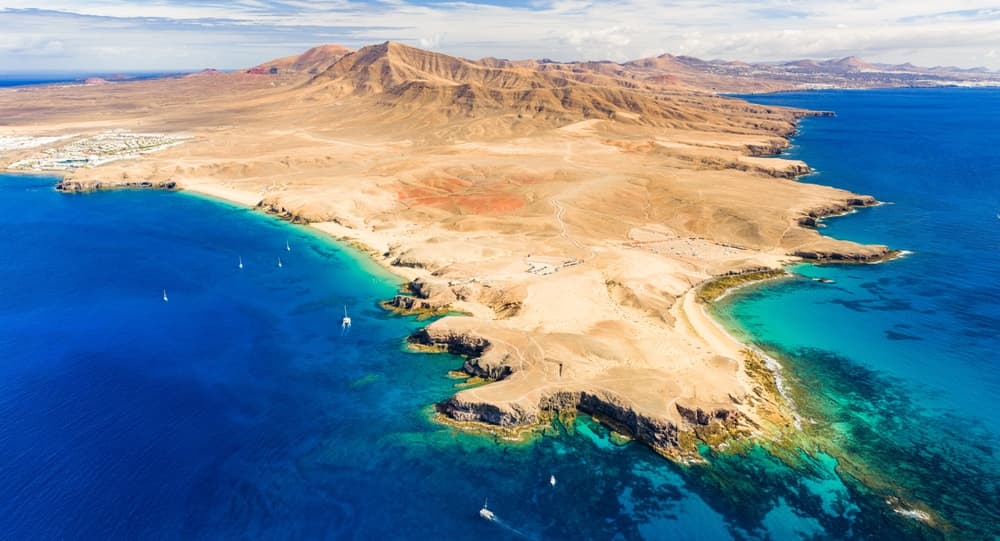
In southern Lanzarote, Playas de Papagayo comprises several unspoilt coves nestled between ochre cliffs and turquoise waters, at the heart of Los Ajaches natural park.
In southern Lanzarote, Playas de Papagayo forms a string of coves protected by ochre volcanic cliffs. White sand, turquoise water and the absence of development make it one of the best-preserved coastlines in the Canaries. Access is from Playa Blanca, via a track crossing the Los Ajaches nature reserve.
Quick facts
- Paid access: an entry fee is charged at the barrier for vehicles entering the nature reserve.
- Pedestrian access: possible from Playa Blanca (approximately 3 km on foot or by water taxi from the port).
- Recommended duration: half-day to full day.
- Facilities: a few seasonal beach bars on the main beach; no infrastructure on secondary coves.
- Accessibility: limited — unmade track and soft sand.
- What to wear: swimwear; certain areas are frequented by naturists.
What to see
The site comprises several distinct beaches: Playa Papagayo (the most well-known), Playa Mujeres, El Pozo, La Cera and Caleta del Congrio. Each is nestled between consolidated lava headlands. The water, shallow and sheltered from the wind, displays hues ranging from emerald green to cobalt blue depending on the time of day. Vegetation is virtually absent — the landscape remains raw and mineral, typical of arid southern Lanzarote.
History and context
The area is part of Parque Natural de Los Ajaches, designated a protected natural space. This ancient volcanic massif, eroded by wind and sea, contrasts with the recent lava flows in the island's centre. Site protection has limited the tourist development that swallowed many other Canary Island coasts during the 1970s-1990s.
Highlights of the visit
Playa Papagayo
The main cove is the most accessible and best equipped. A beach bar offers drinks and light meals in season. The sandy bottom and gentle swell make it an ideal spot for family swimming.
Caleta del Congrio
The most isolated of the coves, accessible only on foot from the track. The water is particularly clear here and the beach much quieter. Beloved by snorkellers for its rocks and small fish.
Playa Mujeres
Neighbouring Papagayo, it attracts a naturist clientele. The setting of golden cliffs is particularly photogenic in late afternoon.
Photography tips
Morning light is ideal: the sun illuminates the ochre cliffs from the east and the water takes on intense green hues. In late afternoon, shadows from the headlands create striking contrasts. From the clifftops between two coves, a downward-angled shot of white sand and turquoise water is particularly effective. Avoid midday in summer: the light is harsh and beaches crowded.
Location and access
The beaches are located approximately 10 km east of Playa Blanca, accessible by car or taxi from Arrecife (approximately 50 km). A carrossable track leads to car parks near the coves. Water taxis regularly depart from Playa Blanca port in season. Accessibility is difficult due to unimproved terrain.
Nearby
- Playa Blanca — beach village with port, restaurants and ferry to Fuerteventura.
- Los Ajaches natural park — arid volcanic massif with hiking trails and coastal views.
- Salinas de Janubio — working salt ponds, remarkable geometric landscape to the west of the area.
- El Golfo — emerald-green lagoon in a volcanic crater, approximately thirty kilometres to the north.
Frequently asked questions
Spring (April-June) and autumn (September-October) offer a good compromise: warm water, moderate crowds and pleasant temperatures. Summer is hot and beaches very crowded, especially at weekends.
A car or water taxi from Playa Blanca are the most convenient options. The track is carrossable but unmade; an ordinary vehicle is sufficient in dry weather.
A beach bar operates in season on the main Papagayo beach. Secondary coves have no services: bring water and food if you plan to explore them.
Yes. Salinas de Janubio and El Golfo can easily be visited the same day by car from Playa Blanca, making a loop via the west coast.
There are no photography restrictions on the natural site. Simply respect the privacy of other swimmers, particularly in naturist areas.
The entry fee applies to motorised vehicles at the reserve barrier. Pedestrians and cyclists generally access free of charge, but check with the local agency to confirm the policy in place during your visit.
Interested in this visit?
We can include it in your personalised itinerary.