Parque del Drago de Icod de los Vinos
Parque del Drago de Icod de los Vinos
In Icod de los Vinos, Parque del Drago is home to the oldest dragon tree in the Canaries, a thousand-year-old specimen rising over 17 metres, surrounded by a rich botanical garden featuring endemic species.
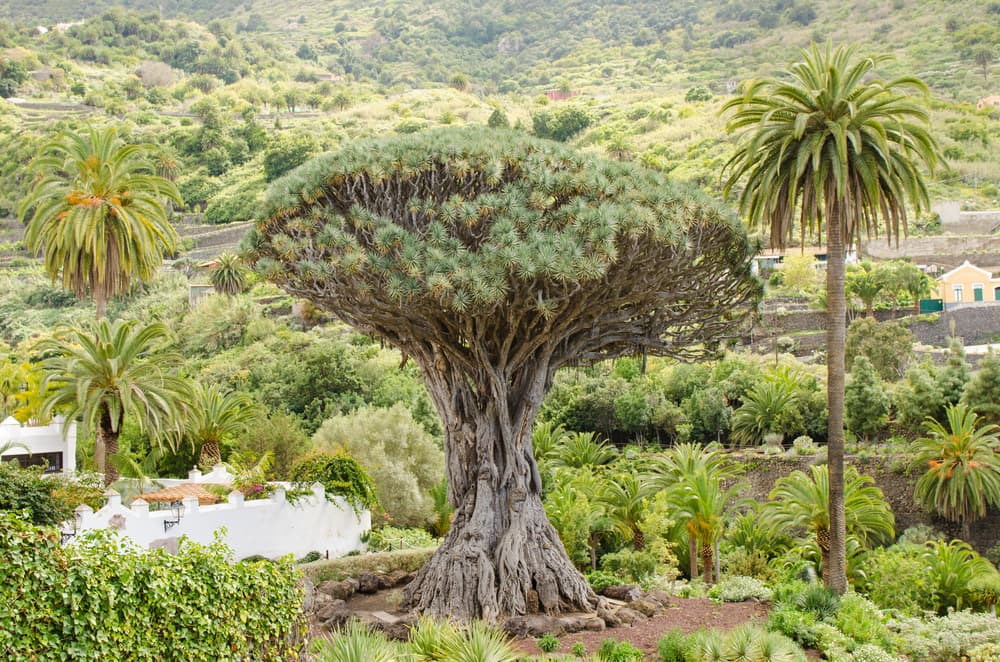
In the heart of Icod de los Vinos, on the north-west coast of Tenerife, Parque del Drago houses the oldest dragon tree in the Canaries. This thousand-year-old specimen — Dracaena draco — reaches over 17 metres in height and boasts an impressive girth. The botanical park surrounding it completes the visit with a collection of endemic and tropical plants. It is one of the archipelago's living symbols.
Practical Information at a Glance
- Admission: Paid entry (individual ticket; reduced rates for children and seniors)
- Suggested duration: 45 minutes to 1.5 hours depending on interest in botany
- Dress code: No dress restrictions; comfortable footwear recommended
- Access: Central Icod de los Vinos, reachable by bus from Puerto de la Cruz and Santa Cruz
- Accessibility: Partially accessible; some trails are steep
What to See
The thousand-year-old dragon tree commands centre stage. Its massive trunk, candelabra-like branches and dense crown make it a unique botanical specimen. The park also features cacti, succulents, endemic Canary species and tropical essences. Explanatory panels provide information on the dragon tree's biology and the red resin — "dragon's blood" — historically used as a dye and medicine.
History and Context
The Icod dragon tree is estimated to be over 1,000 years old, with some sources suggesting up to 3,000 years, though precise dating remains debated. The Guanche, the Canaries' indigenous people, held it in sacred regard. The red resin extracted from the tree was used in rituals and medicine. Dracaena draco is today protected and classified as a natural monument in the Canaries.
Highlights of Your Visit
The Thousand-Year-Old Dragon Tree
The tree reveals itself gradually as you move through the park. Its umbrella-like silhouette, visible from the neighbouring church square, is unmistakable. Up close, the scale of the trunk and the density of foliage impress far more than photographs convey.
The Botanical Garden
The park brings together several hundred plant species. Botany enthusiasts will appreciate the zones dedicated to endemic Canary plants, cacti and introduced tropical species. Panels are displayed in Spanish and English.
Views of the San Marcos Church
From certain points in the park, the bell tower of the San Marcos Church in Icod stands out against the dragon tree backdrop. This composition is one of the most photographed sights in Tenerife.
Photography Tips
Morning light is softer and avoids harsh overhead shadows. To frame the entire tree, step back towards the park's lower terraces. The view from Plaza de la Constitución, just outside, offers a classic angle with the church in the background. The play of light filtering through the crown is particularly striking in late morning.
Location and Access
Icod de los Vinos sits on Tenerife's north-west coast, between Garachico and Puerto de la Cruz. The park is located in the town centre, steps from Plaza de la Constitución. TITSA bus lines connect Icod to Puerto de la Cruz and Santa Cruz de Tenerife. By car, public parking is available near the centre. Accessibility is partial due to internal slopes.
Nearby Attractions
- Garachico — Historic former port with natural volcanic pools, a short distance to the west.
- Puerto de la Cruz — Lively coastal resort on the north coast, a convenient starting point for visiting Icod.
- Loro Parque — Renowned wildlife park located in Puerto de la Cruz, combinable for a day trip.
- Masca — Hillside village in the Teno range, accessible from Icod via a spectacular mountain road.
Frequently asked questions
The park is open year-round. Spring and autumn offer pleasant temperatures and favourable light for photography. In summer, plan your visit for the morning to avoid the heat.
Allow between 45 minutes and 1.5 hours. An hour is sufficient to see the tree and stroll through the botanical garden at a leisurely pace.
Yes, the two sites are close to one another on the north-west coast. A half-day allows you to visit the park in the morning and reach Garachico for lunch.
Personal photography is permitted throughout the park. No particular restrictions are noted for individual visitors.
Access is partial. Some pathways are passable, but slopes and steps limit wheelchair circulation in parts of the garden.
TITSA buses serve Icod from Santa Cruz and Puerto de la Cruz. By car, the TF-5 (northern motorway) is the most direct route from the capital.
Interested in this visit?
We can include it in your personalised itinerary.