Alto de Garajonay
Alto de Garajonay
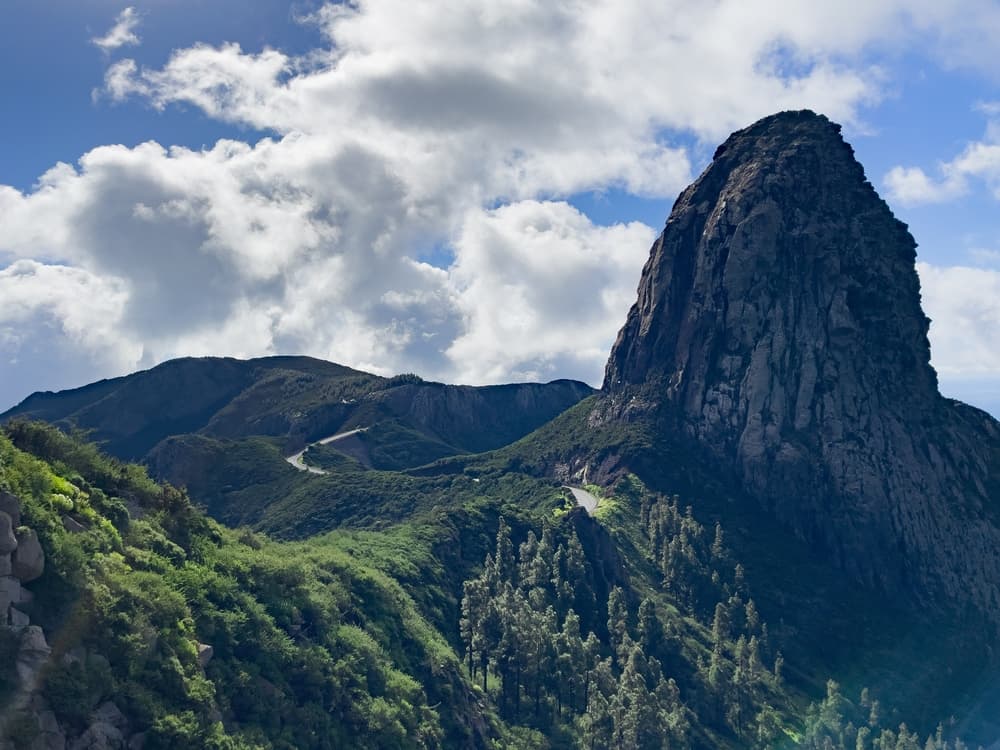
At 1,487 meters, Alto de Garajonay towers over La Gomera and its laurisilva forest—a subtropical remnant inscribed as a UNESCO World Heritage Site. Panoramic vistas across multiple islands and immersive trails await.
Alto de Garajonay rises to 1,487 meters, the highest point on the island of La Gomera. This summit marks the heart of the national park bearing its name, inscribed as a UNESCO World Heritage Site. The laurisilva forest surrounding it is among the best-preserved on the planet—a remnant of a subtropical ecosystem that blanketed the Mediterranean basin millions of years ago.
Quick practical info
- Access: Paved road from San Sebastián de La Gomera via TF-713; parking at the summit
- Entry: Free (national park accessible without charge)
- Recommended duration: 1 to 2 hours for the summit and immediate trails
- Attire: Hiking shoes recommended; warm clothing even in summer (frequent fog)
- Accessibility: The viewpoint area is partially accessible; forest trails are uneven
What to see
At the summit, a viewing platform delivers panoramic vistas across all of La Gomera and, on clear days, the Teide on Tenerife, La Palma, El Hierro, and Gran Canaria. The immediate vegetation is dominated by laurels, tree heathers, and giant ferns. Fog regularly clings to the trees, creating a dense, hushed atmosphere.
History and context
Garajonay National Park was established in 1981 and inscribed as a UNESCO World Heritage Site in 1986. The laurisilva forest it contains is a Tertiary relic, preserved through the constant humidity brought by the trade winds. The name "Garajonay" is tied to local legend: two lovers, Gara and Jonay, are said to have taken their own lives at the summit to escape separation.
Visit highlights
The panorama from the viewpoint
On clear days—often in the morning before clouds arrive—the view encompasses several islands of the archipelago. The Teide, visible from La Gomera, rises above the sea like an isolated cone.
The laurisilva forest
Trails departing from the summit descend into a lush primary forest. Moss-covered trunks, tree ferns, and filtered light compose a landscape radically different from the rest of the Canaries.
Marked trails throughout the park
Several signposted routes depart from the summit or its surroundings. Some descend toward villages like Vallehermoso or El Cedro, allowing for multi-hour forest traverses.
Photography tips
Light is optimal early in the morning, before fog rises. On misty days, forest photography gains atmosphere as rays filter through moss-laden branches. Avoid midday in summer, when summit visibility is often nonexistent. No known photography restrictions exist within the park.
Location and access
Alto de Garajonay lies at the geographical center of La Gomera, accessible from San Sebastián de La Gomera (the island's capital) via the TF-713 road. The journey from San Sebastián takes roughly 30 to 40 minutes by car. Local bus lines connect San Sebastián to the park, though frequency is limited—verify schedules at the local tourism office. The ferry from Los Cristianos (Tenerife) arrives in San Sebastián, the natural starting point for reaching the summit.
Nearby attractions
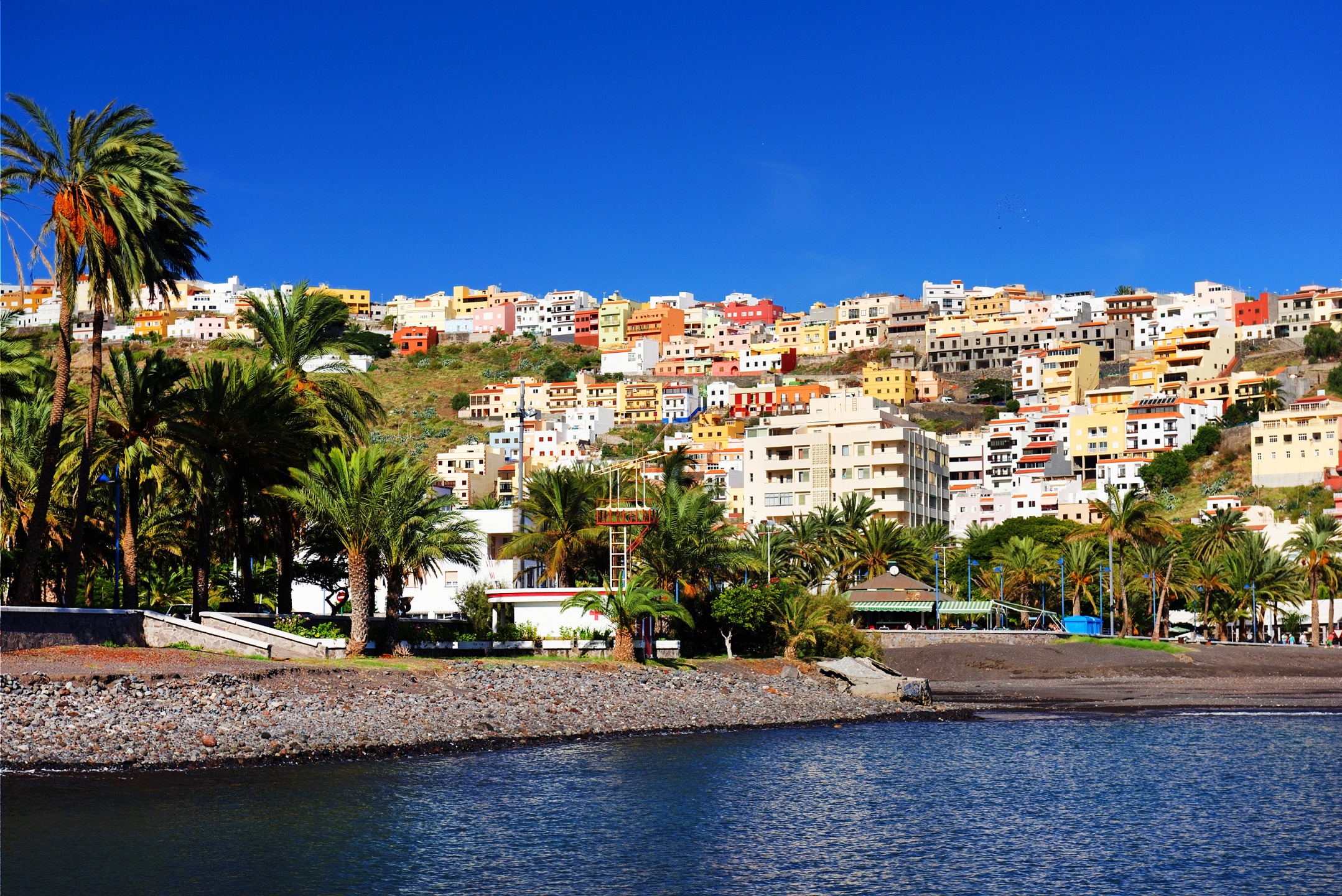
- San Sebastián de La Gomera — the island's capital, ferry arrival point, and logistical base for exploring the park.
- El Cedro — a forest hamlet at the heart of the park, accessible on foot from the summit, surrounded by dense laurisilva.
- Vallehermoso — a village in the north of the island, terminus for several trails descending from Garajonay.
- Las Rosas — a village known for demonstrations of the traditional Gomaran whistle language, silbo, near the park.
Frequently asked questions
Spring and autumn offer the best conditions: mild temperatures and a higher likelihood of clear skies at the summit. In summer, fog often settles in by mid-morning. Winter can be cold and windy.
For the viewpoint alone, closed-toe shoes suffice. For forest trails, hiking shoes with non-slip soles are strongly advised: paths are often wet and muddy.
Yes. One day allows you to combine the summit with a descent to El Cedro or a stop at Las Rosas to watch a silbo demonstration. San Sebastián, 30-40 minutes by car, rounds out the day easily.
Entry to the national park and access to the summit are free. Parking at the viewpoint is also complimentary.
No photography restrictions are imposed within the national park. Photography is free for personal use.
Local bus lines serve the park from San Sebastián de La Gomera, though frequency is limited. Check with San Sebastián's tourism office for current schedules. Taxis from the capital are a reliable alternative.
Interested in this visit?
We can include it in your personalised itinerary.