Valle Gran Rey
Valle Gran Rey
Valle Gran Rey cascades down to the Atlantic between ochre cliffs and tiered palmeraies. Dark sand beaches, a fishing port, whale-watching excursions and access to Garajonay National Park: La Gomera's wildest valley.
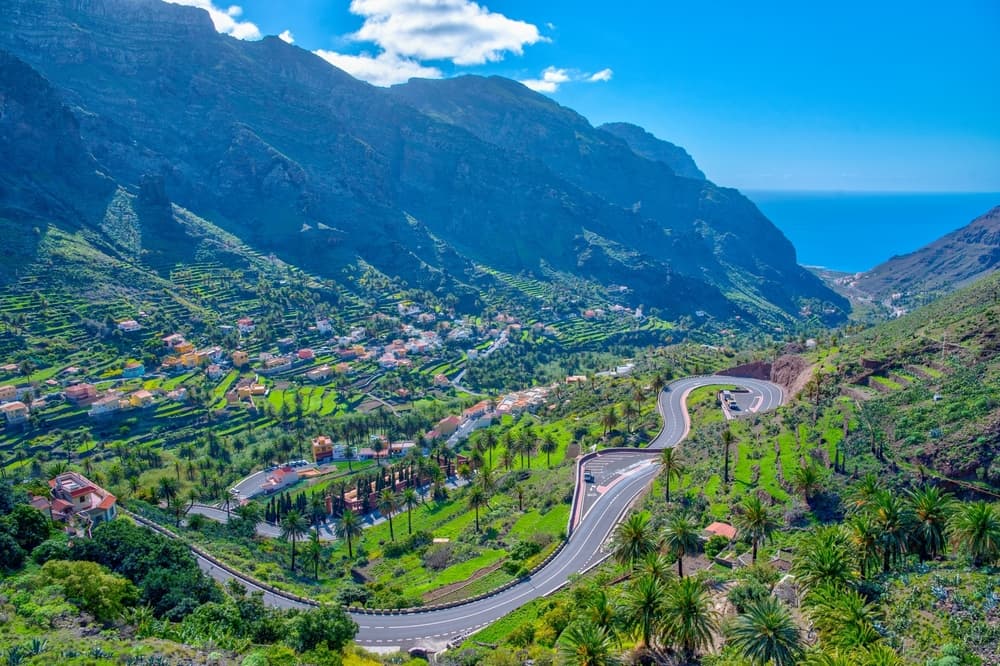
Valle Gran Rey is a narrow valley that tumbles down to the Atlantic Ocean at the south-western tip of La Gomera. Its terraced palm groves, ochre and black volcanic cliffs, and peaceful waterfront make it one of the island's most sought-after destinations. The village attracts hikers, families and travellers seeking unspoiled nature, far from the bustle of the Canaries' major resort towns.
Practical essentials at a glance
- Access: Ferry from Los Cristianos (Tenerife) to San Sebastián de La Gomera, then bus or rental car to Valle Gran Rey.
- Recommended duration: at least two days to combine beach, hiking and village exploration.
- What to bring: hiking boots recommended for terraced trails.
- Accessibility: the waterfront and main beach are accessible; the terraced trails are not.
What you'll see
The valley comprises several staggered hamlets — La Calera, Vueltas, La Playa — linked by a winding road. At the bottom, the fishing port of Vueltas is home to traditional boats and excursion vessels. Dark sand and pebble beaches stretch beneath the cliffs. Terraced groves of La Gomera date palms (Phoenix canariensis) blanket the slopes up to several hundred metres in elevation.
History and context
La Gomera is geologically one of the oldest islands in the Canary archipelago. Valle Gran Rey long depended on terraced farming — bananas, tomatoes, palms — and fishing. From the 1970s onwards, the valley attracted alternative European travellers drawn by its remoteness. This discreet hippie past now coexists with organised hiking tourism.
Highlights of a visit
La Playa beach and the waterfront
The seafront concentrates restaurants, terraces and small shops. The dark sand beach is protected by a breakwater; the waters are typically calm, ideal for family swimming.
The palm terraces
Trails climbing from La Calera wind through protected palm groves. The Canary date palm is cultivated here for miel de palma production, a sweet syrup typical of La Gomera. Some local producers offer informal tours.
César Manrique viewpoint
Perched on the road descending into the valley, this lookout commands panoramic views of the entire canyon and ocean. Designed by Lanzarote-born architect and artist César Manrique, it integrates into the volcanic landscape without intruding upon it.
Sea excursions
From Vueltas port, boats depart regularly for dolphin and whale-watching trips in the channel between La Gomera and Tenerife, one of the north-east Atlantic's most active migration corridors.
Photography tips
Morning light from the east illuminates the ochre cliffs; this is the best time to photograph the terraces from La Calera trails. In late afternoon, the sun dips behind the ridges, casting dramatic shadows across the canyon. Vueltas port photographs beautifully at golden hour, with colourful boats in the foreground.
Location and access
Valle Gran Rey lies at the south-western tip of La Gomera. From San Sebastián de La Gomera (the island's capital), the road crosses the heart of Garajonay National Park before descending to the coast. Public buses connect San Sebastián to Valle Gran Rey, though schedules are limited; a rental car offers the most flexibility. Ferries from Los Cristianos (Tenerife) serve San Sebastián several times daily.
Nearby attractions
- Garajonay National Park — laurel forest listed as UNESCO World Heritage, accessible in under an hour from the valley.
- San Sebastián de La Gomera — the island's capital, ferry hub and historical site linked to Christopher Columbus's voyage.
- Playa de Santiago — quieter fishing village in the south of the island, with a black pebble beach.
Frequently asked questions
La Gomera enjoys mild weather year-round. Spring and autumn are ideal for hiking. Summer is warm and dry on the coast; the island's interior stays cooler thanks to the cloud forest.
Take the ferry from Los Cristianos to San Sebastián de La Gomera, then a bus or rental car to the valley. The ferry journey takes approximately one hour.
Yes. The road between the valley and the park is spectacular. Plan a full day: morning ascent through the laurel forest, return to the coast in late afternoon.
The main La Playa beach, protected by a breakwater, typically offers calm waters. The sand is dark and volcanic in nature. Check local conditions before swimming.
Boat excursions regularly depart from Vueltas port for dolphin and whale-watching in the channel between La Gomera and Tenerife. This corridor ranks among the north-east Atlantic's richest in marine life.
Miel de palma is a syrup obtained by reducing the sap of the Canary date palm. It is a La Gomera speciality, used in cooking and pastry-making. You'll find it in local shops throughout the valley.
Interested in this visit?
We can include it in your personalised itinerary.