Santa Cruz de La Palma
Santa Cruz de La Palma
Santa Cruz de La Palma, capital of La Palma island, preserves an intact Renaissance historic center with its sculpted wooden balconies, Plaza de España, and colorful waterfront houses.
Santa Cruz de La Palma is the capital of La Palma island in the Canaries archipelago. Built on a narrow coastal strip between the Atlantic Ocean and volcanic cliffs, the city preserves a remarkably intact historic center, a legacy of its past as a major colonial port. It is a human-scale city, lively without being overwhelmed by tourists, where 16th-century architecture coexists with authentic local life.
Essential Information at a Glance
- Access: La Palma airport (SPC) approximately 8 km to the south; regular connections from Las Palmas de Gran Canaria and Tenerife.
- Local Transport: network of interurban buses (guaguas) linking the capital to other municipalities on the island.
- Recommended Duration: half a day for the historic center; a full day to combine museums and waterfront.
- Dress Code: no particular constraints in town; smart casual recommended for churches.
What to See
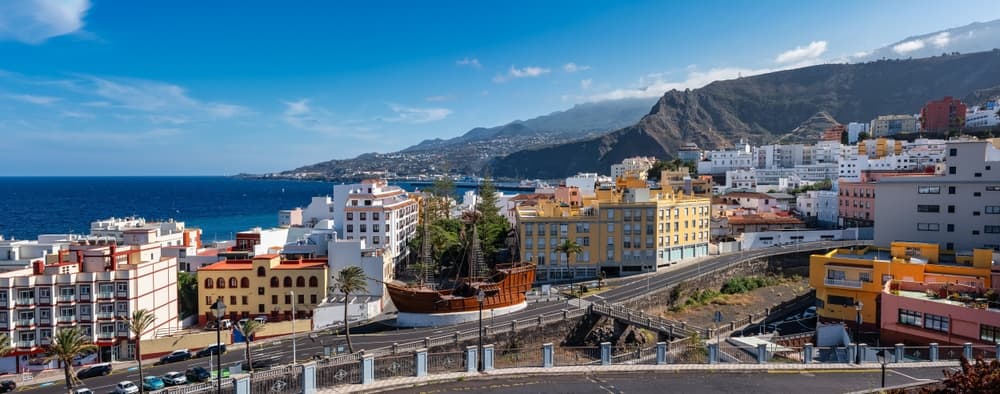
The heart of the city revolves around the Plaza de España, bordered by the El Salvador church and the Renaissance Town Hall. Calle O'Daly, the main pedestrian thoroughfare, lines facades with sculpted wooden balconies typical of Canarian architecture. The waterfront, the Paseo Marítimo, is lined with colorful houses whose facades reproduce the silhouette of a galleon — a direct reference to the city's maritime past.
History and Context
Founded in 1493 following the Castilian conquest, Santa Cruz de La Palma became in the 16th century one of the most active ports of the Spanish Empire, Spain's third port after Seville and Antwerp according to some historical sources. This transatlantic trade explains the architectural wealth of the center: Renaissance buildings, merchant houses, convents. The city has preserved this heritage better than many other island capitals.
Highlights of Your Visit
Plaza de España and El Salvador Church
The central square concentrates the founding monuments: the El Salvador church, whose construction began in the 16th century, houses a remarkable mudéjar coffered ceiling. The Renaissance Town Hall, with its arcaded facade, is one of the best-preserved examples of the style in the Canaries.
Calle O'Daly and Canarian Balconies
This pedestrian street concentrates the wooden balconies made of tea pine (Canary pine) that form the visual signature of La Palma. Each facade is different; some balconies date from the 17th century. Local shops sell cigars, palm honey, and embroideries.
Paseo Marítimo and Galleon Houses
The waterfront offers a pleasant stroll facing the Atlantic. Houses painted in vibrant colors, some of which mimic the prow of a ship, recall that the city thrived to the rhythm of colonial fleets. It is also the best place to observe the sunset over the ocean.
Naval Museum (Barco de la Virgen)
Housed in a full-size replica of a 16th-century caravel anchored in the port, this museum traces the maritime history of the island. The object itself — the ship-museum — constitutes a unique architectural curiosity in the Canaries.
Photography Tips
Morning light is ideal on the Plaza de España before crowds arrive. For the colorful facades of Paseo Marítimo, favor late afternoon when raking light brings out details. Calle O'Daly photographs best early in the morning, when the street is still quiet. Wooden balconies stand out best on slightly overcast days, without harsh shadows.
Location and Access
Santa Cruz de La Palma sits on the east coast of the island, at the foot of the Caldera de Taburiente. The historic center is entirely pedestrian and compact — everything is accessible on foot. From the airport, regular buses and taxis serve the capital. The port welcomes ferries from Tenerife and other islands in the archipelago.
Nearby places accessible by bus or car:
- Caldera de Taburiente — volcanic national park, approximately 20 km to the west.
- Los Llanos de Aridane — second city on the island, on the west side, heart of banana cultivation.
- Roque de los Muchachos — island's summit at over 2,400 m, home to major astronomical observatories.
Nearby Attractions
- Caldera de Taburiente — immense collapse crater classified as a national park, ideal for hiking.
- Roque de los Muchachos — La Palma's highest point, with some of Europe's clearest skies for astronomy.
- Los Llanos de Aridane — lively town surrounded by banana plantations and vineyards.
- Fuencaliente — southern tip of the island, vineyards on lava, lighthouses, and natural pools.
Frequently asked questions
The climate is mild year-round. Spring (March-May) and autumn (September-November) offer pleasant temperatures and fewer crowds. The Santa Cruz de La Palma Carnival in February is one of the oldest and most renowned in the Canaries.
Half a day is sufficient to walk around Plaza de España, Calle O'Daly, and Paseo Marítimo. Allow a full day if you wish to visit museums and explore at a leisurely pace.
Yes, but plan two separate days. The Caldera deserves a full day of hiking. The city is best visited in the morning or evening, when light is favorable and heat is moderate.
Generally, photography without flash is tolerated in non-liturgical spaces. Respect prohibition signs posted at entrances and avoid photographing during services.
Regular ferries connect Santa Cruz de Tenerife to the port of Santa Cruz de La Palma. Direct flights from Tenerife Norte (TFN) also serve La Palma airport in less than 30 minutes.
La Palma is known for its artisanal cigars, palm honey (miel de palma), embroideries (calados), and wines produced on volcanic soil. Calle O'Daly concentrates most specialty shops.
Want to discover this destination?
Our local advisors design your tailor-made trip.