Corralejo
Corralejo
In northern Fuerteventura, Corralejo brings together a natural park of Saharan dunes, beaches with turquoise waters, and an active harbor facing Lanzarote. Ideal for nature, kitesurfing, and excursions to Los Lobos.
Corralejo is a coastal town in northern Fuerteventura, facing the island of Lanzarote. It owes its reputation to its white sand dunes protected as a natural park, turquoise waters, and a lively village atmosphere. It's the natural starting point for exploring the northern part of the island, reaching nearby islets, or simply enjoying a pristine coastline just minutes from the center.
Practical Info at a Glance
- Access: Regular ferry from Playa Blanca (Lanzarote); buses from Puerto del Rosario (Fuerteventura's capital)
- Recommended duration: 1 to 3 days to combine dunes, beaches, and excursions
- Dress code: No particular restrictions; sunscreen essential (intense wind and glare)
- Accessibility: The waterfront and port are accessible; dunes remain difficult for wheelchairs
What to See
The Corralejo Dunes Natural Park stretches for several kilometers south of the town. These fine sand dunes, of Saharan origin, contrast with the dark colors of volcanic flows. Adjacent beaches—Playa del Moro, Playa de la Barca—offer shallow waters ideal for snorkeling and kitesurfing.
The town center preserves a core of low-rise streets around the fishing port. The market, surf shops, and fresh fish restaurants set the tone of an unpretentious seaside resort.
History and Context
Corralejo was a modest fishing village until the 1970s, when beach tourism transformed northern Fuerteventura. The Dunes Natural Park was created to protect the dune strip from construction, after a hotel complex had already been built there—it remains today as an anomaly within the protected site.
Highlights of Your Visit
The Dunes Natural Park
The dunes stretch for approximately 10 km along the eastern coastline. You can explore them on foot from the main road or from the beaches. In the morning, before the afternoon wind picks up, the low light reveals the ripples in the sand.
The Los Lobos Islets
Just minutes by boat from the port, the Los Lobos islet is an almost deserted natural reserve. Marked trails, transparent seabeds, and a small volcano to climb: half a day is enough.
The Waterfront and Port
The Muelle Chico (small harbor) remains active: fishing boats, ferries to Lanzarote, catamaran excursions. The maritime promenade concentrates terraces and water sports rental shops.
Kitesurfing and Windsurfing
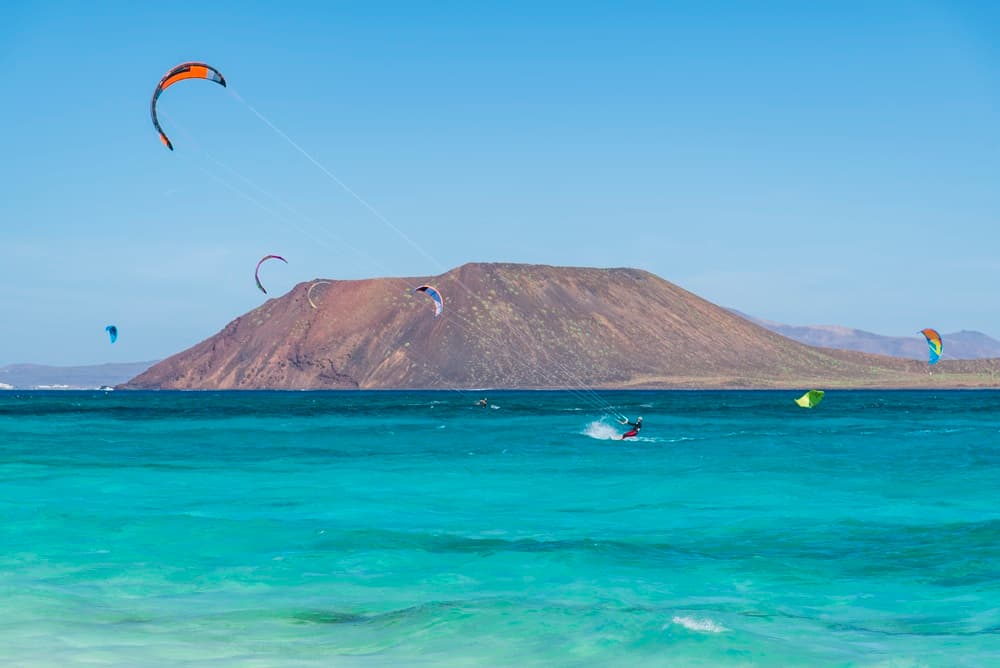
The regular northeast trade wind makes Corralejo one of Europe's most popular kitesurfing destinations. Several schools offer courses for beginners on the natural park beaches.
Photography Tips
The dunes photograph best early in the morning or late afternoon: oblique light carves shadows and reveals textures. Avoid midday when glare flattens contrast. For views of Lanzarote, position yourself on Grandes Playas beach facing north.
Location and Access
Corralejo sits at the northern tip of Fuerteventura, approximately 38 km from Puerto del Rosario via the FV-1. Fuerteventura Airport is served by direct flights from most major European cities. Regular buses connect the airport and Puerto del Rosario to Corralejo. Car rental remains the most convenient way to explore the dunes and isolated beaches in the north.
The Corralejo–Playa Blanca ferry (Lanzarote) runs several times daily and allows you to combine both islands in one trip.
Nearby
- Corralejo Dunes Natural Park — protected dune strip, accessible on foot from town.
- Los Lobos Islet — pristine natural reserve, accessible by boat from the port.
- El Cotillo — fishing village to the west, known for its natural lagoons and preserved atmosphere.
- Lajares — artisan village inland, local market and traditional embroidery workshops.
- Playa Blanca (Lanzarote) — ferry terminus, gateway to southern Lanzarote.
Frequently asked questions
Fuerteventura enjoys mild weather year-round. Spring and autumn offer pleasant temperatures and fewer crowds. Summer is hot and very busy. Winter remains sunny but wind can be strong.
Yes. The natural park beaches (Grandes Playas, Playa del Moro) are accessible and suitable for swimming. Waters are generally calm in the morning; in the afternoon, wind creates waves appreciated by kitesurfers.
Shuttle boats depart regularly from Corralejo port. The crossing takes about 15 minutes. Access to the islet is regulated: the number of daily visitors is limited to preserve the natural reserve.
Yes. The shallow waters of the natural park beaches are suitable for children. The waterfront is lively and safe. Water parks and supervised water activities add to the family offering.
The town itself is walkable. To explore isolated beaches in the natural park, El Cotillo, or the interior of the island, a rental car is highly recommended. Buses exist but frequencies are limited.
Yes, it's one of the most popular itineraries in the Canaries. The daily ferry to Playa Blanca allows for a day trip or a split stay between the two islands.
Interested in this visit?
We can include it in your personalised itinerary.