Fuerteventura
Fuerteventura
Fuerteventura, the second-largest island in the Canaries, captivates with its UNESCO-listed dunes, wild beaches like Cofete and world-renowned surf and kitesurfing spots.
Fuerteventura is the second-largest island in the Canaries, approximately 100 km off the coast of Western Sahara. Renowned for its white-sand beaches and dunes protected as a UNESCO Biosphere Reserve, it attracts surfers, kitesurfers and volcanic hiking enthusiasts. Its arid terrain, whitewashed villages and virtually untouched coastline make it a distinctive destination within the archipelago.
Practical Information at a Glance
- Access: Fuerteventura International Airport (FUE), near Puerto del Rosario; direct flights from many European cities.
- Internal transport: buses (Tiadhe) between major towns; car rental recommended to explore the island.
- Recommended duration: 5 to 10 days to cover the north, centre and south of the island.
- Dress code: no special restrictions; sunscreen essential, the wind can be deceptive.
- Accessibility: major beaches (Corralejo, Morro Jable) have ramps and amphibious wheelchairs in season.
What to See
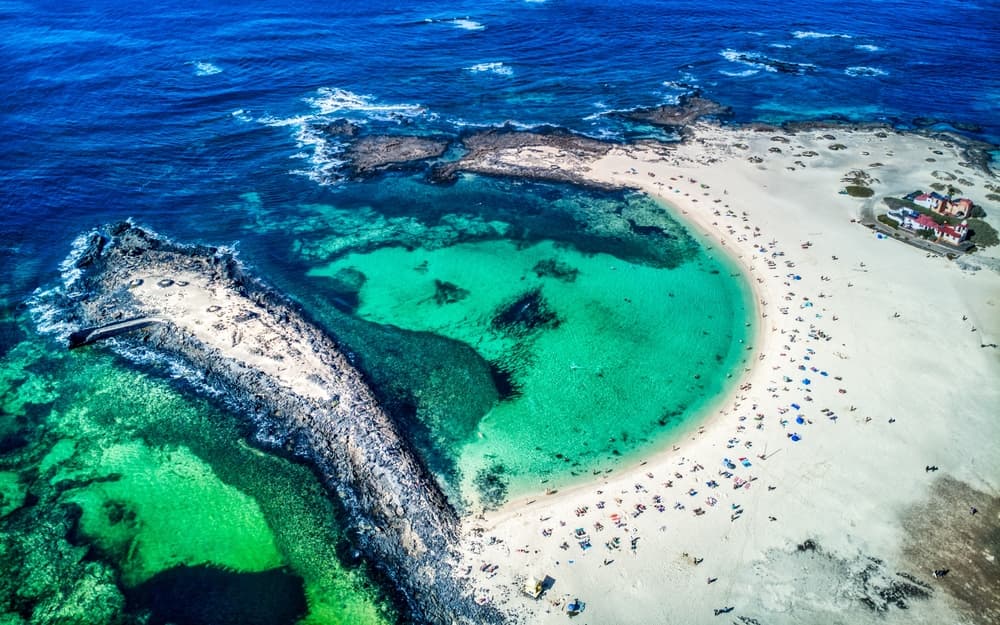
The island divides into several distinct zones. In the north, the Corralejo Dunes Natural Park stretches for kilometres of golden dunes facing the Lobos islet. The centre reveals an austere volcanic landscape, dotted with restored windmills at Tiscamanita and La Oliva. In the south, the Jandía peninsula hosts remote, uncrowded beaches, including Cofete, accessible only by rough track.
History and Context
Inhabited by the Majos, a Berber people, before the Castilian conquest in the 15th century, Fuerteventura was long a place of exile. Spanish writer Miguel de Unamuno was banished here in 1924; his house in Puerto del Rosario is now a museum. The island remained isolated and underdeveloped until tourism boomed in the 1970s-1980s.
Highlights of Your Visit
Corralejo Dunes Natural Park
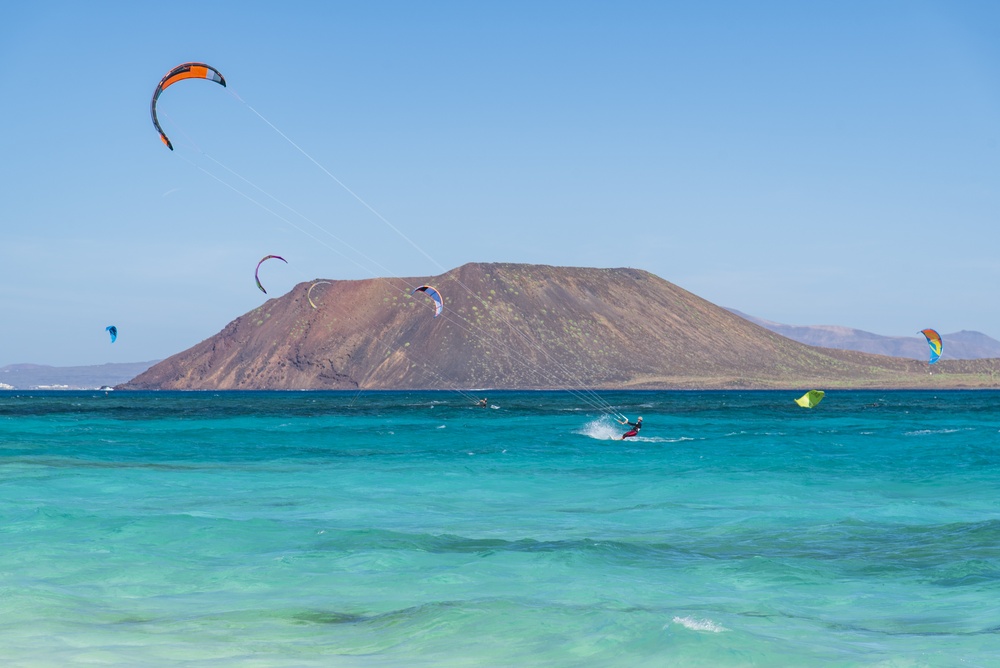
In the north-east of the island, this park protects over 2,500 hectares of fine sand dunes. The beaches bordering it rank among the finest in the Atlantic. The Lobos islet, accessible by ferry from Corralejo, is a paradise for diving and hiking.
Jandía Peninsula
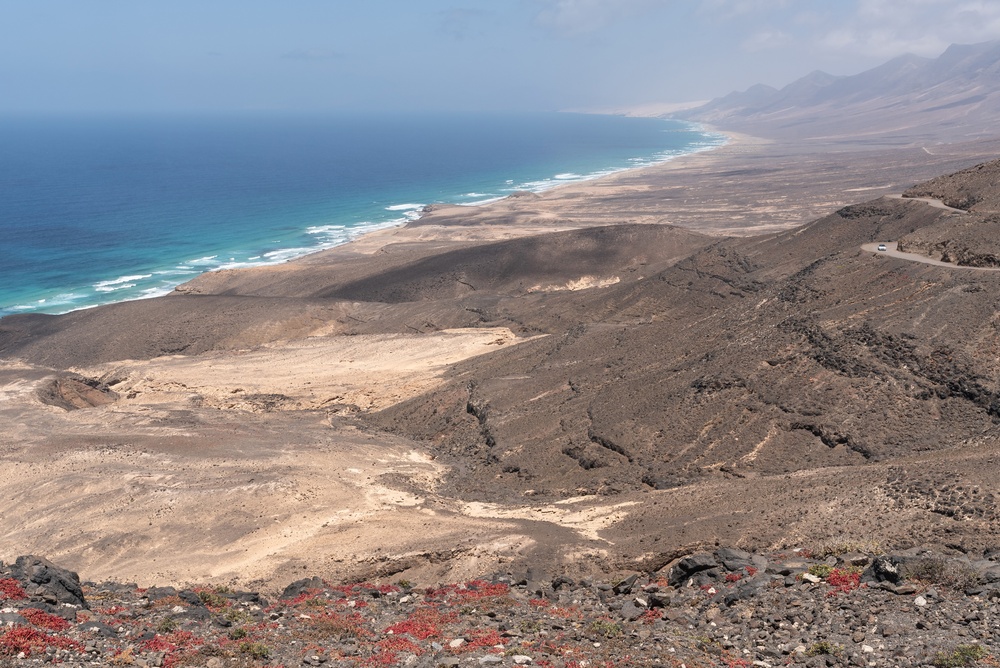
The southern tip of the island concentrates near-deserted beaches. Playa de Cofete, framed by the Jandía mountains, is accessible via an unpaved track. The view from Degollada de Cofete pass over the ocean and plain is breathtaking.
Betancuria
The island's former capital, this hillside village in the central mountains retains a medieval atmosphere. The Santa María de Betancuria church (15th century) is one of the oldest religious buildings in the Canaries. Cobbled streets and whitewashed houses contrast with the surrounding aridity.
Surfing and Kitesurfing at El Cotillo and Sotavento
El Cotillo, in the north-west, attracts surfers with its consistent waves. The Sotavento lagoon, on the east coast, is the playground for kitesurfers worldwide and hosts an international competition each summer.
Photography Tips
The golden morning light on Corralejo dunes is ideal before the first visitors arrive. At Cofete, sunset from the pass offers a panorama of the beach and ocean. The Tiscamanita windmills photograph well in late afternoon, with mountains in the background. Wind sometimes stirs the sand: protect your lens.
Location and Access
Fuerteventura lies approximately 100 km west of African shores. Puerto del Rosario Airport serves the island from Europe. Regular ferries connect Fuerteventura to Lanzarote (approximately 30 minutes) and Gran Canaria. Car rental remains the most practical way to travel between different parts of the island.
Nearby Attractions
- Lanzarote — neighbouring island accessible by ferry, famous for Timanfaya National Park and César Manrique's architecture.
- Lobos Islet — nature reserve minutes from Corralejo, ideal for diving and hiking.
- Gran Canaria — more developed island, with Maspalomas dunes and vibrant cultural life in Las Palmas.
Frequently asked questions
Spring (March-May) and autumn (September-November) offer pleasant temperatures and fewer crowds. Summer is hot and very busy. Winter remains mild, ideal for hiking.
Yes, highly recommended. The bus network covers major towns, but sites like Cofete or Betancuria are hard to reach without a vehicle.
Yes. A ferry links Corralejo (northern Fuerteventura) to Playa Blanca (Lanzarote) in about 30 minutes. Allow at least two extra days for Lanzarote.
The track to Cofete is unpaved and rough. A high-clearance vehicle is advisable, though ordinary cars do travel it in dry weather.
Yes. The calm east-coast beaches (Caleta de Fuste, Costa Calma) are shallow and child-friendly. Major resorts have full facilities.
El Cotillo and Corralejo suit intermediate and advanced surfers. Several spots on the island offer surf schools with lessons for beginners.
Attractions in Fuerteventura
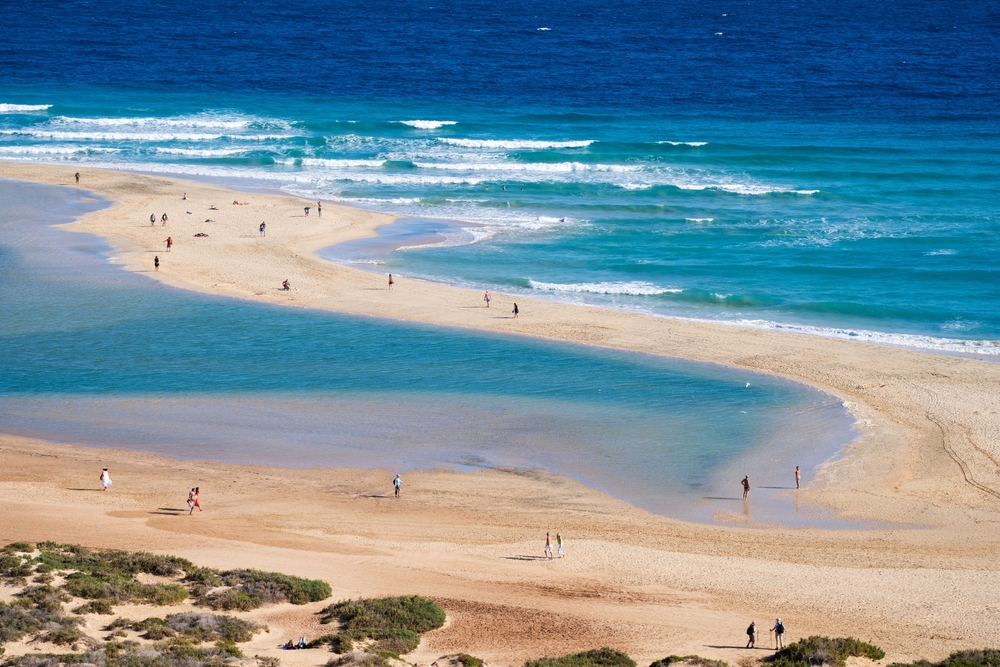
Playa de Sotavento (Playa Barca)
Playa Barca est le nom local d'un tronçon de la Playa de Sotavento, immense plage de la péninsule de Jandía, au sud de Fuerteventura. Ses eaux peu profondes forment à marée basse un lagon turquoise
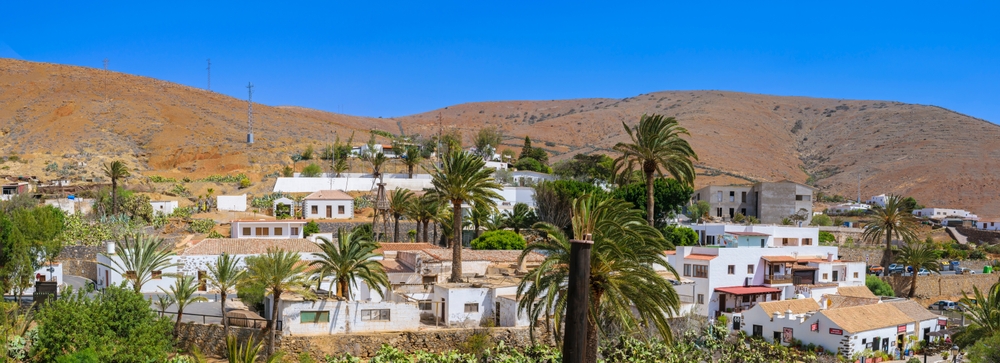
Betancuria
Betancuria est l'ancienne capitale de Fuerteventura, nichée dans une vallée volcanique du centre-ouest de l'île. Fondée au XVe siècle par le conquistador normand Jean de Béthencourt
Corralejo
Corralejo est une ville côtière au nord de Fuerteventura, face à l'île de Lanzarote. Elle doit sa réputation à ses dunes de sable blanc classées parc naturel, à ses eaux turquoise
Parc naturel de Jandía (Parque Natural de Jandía)
À l'extrémité sud de Fuerteventura, la péninsule de Jandía abrite un parc naturel d'environ 14 000 hectares classé depuis 1987.
Want to discover this destination?
Our local advisors design your tailor-made trip.